
Repairing a garage floor coating that has taken a beating
Winter salt, hot tires, oil, dropped tools and a floor jack all work over the same few hundred square feet of a garage. A rolled-on kit or a contractor’s coating usually shows it at the tire spots first, then at the door. Danny sorts the damage on the walk into what can be repaired and what has to come up.

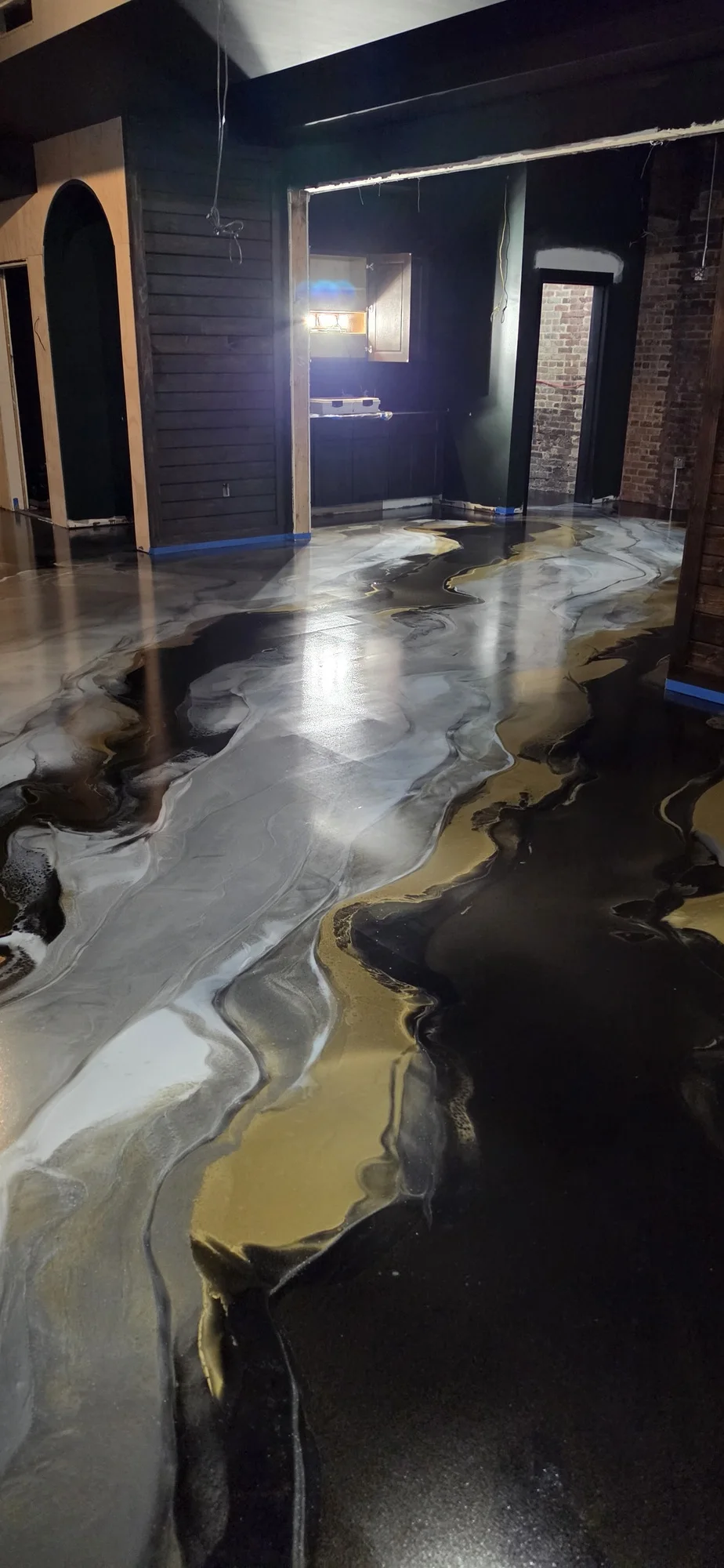
Damaged Garage Floor Coating Repair, from Danny’s side of the job
A damaged garage coating usually has more than one problem at once, so the repair is planned as a whole garage. Peeling under the tires gets cut back to coating that is still bonded. Chips get ground and filled. Oil-soaked spots have to be cleaned out of the concrete before anything sticks to them. Once the damaged areas are sound, the floor is recoated so the repairs disappear into one finish, with flake broadcast back in on flake floors.
A damaged garage coating usually has more than one problem at once, so the repair is planned as a whole garage.
It fits garages where most of the coating is still holding. When a roll-on kit is peeling across the floor, repairs will not keep up, and the coating needs to come off by grinding so the slab can be coated properly from bare concrete. The door threshold is often the weak spot, since water and salt sit there all winter. If the slab has heaved at the apron or the drain area holds water, a concrete contractor may need to look at it before Danny recoats.
Danny walks the garage with the cars out, starting at the door where salt and water come in and working back to the wall. He checks the tire spots for peeling, presses on the edges of chips, and looks at oil stains to see how deep they have gone. He also asks how the garage is used, because a weekend workshop and a two-car daily parking spot wear differently. Then the damaged areas are ground back, cleaned and repaired, the whole floor is prepared for the recoat, and the new coating is poured. After the cure, he walks it with you before the cars come back.
A garage floor usually fails first where the tires park and where the salt comes in.
The order the work goes in
A garage with several kinds of damage gets triaged first, so the stages below sort tire peeling, chips, oil and salt into one repair plan before any grinder starts.


Sorting damage into four piles
Danny walks the bay and sorts what he sees into hot-tire peeling, impact chips, oil that reached bare concrete and salt wear near the door. Each type gets its own chalk color, which makes it easy to see where the damage overlaps and where the coating is untouched.

Deciding repair or removal
If the chalk marks cover most of the floor, or the coating is a thin kit lifting everywhere, he recommends removal and explains why. If the damage stays in the parking spots and the door strip, the plan stays a repair, and its boundaries are drawn along the joints.

Pulling oil from the open spots
Wherever a chip or peel exposed concrete that took on oil, the spot is degreased and ground below the stained layer, then checked again after a warm day for oil working back up. Coating over a contaminated patch is the quickest way to start the next peel.

Grind-backs, fills and flake
Peeled and chipped areas are ground back to coating that holds, filled and rebuilt in the floor’s color, with flake broadcast in where the floor has it. The salt-worn strip at the door gets the same treatment, since that is usually where the next failure would begin.
Unified topcoat before the cars return
The whole garage is sanded and topcoated so the repaired zones and the original floor share one surface. After the cure, Danny walks the bay with the owner, points out where each repair sits under the finish and sets the day the cars can come back in.
More of Danny’s floors
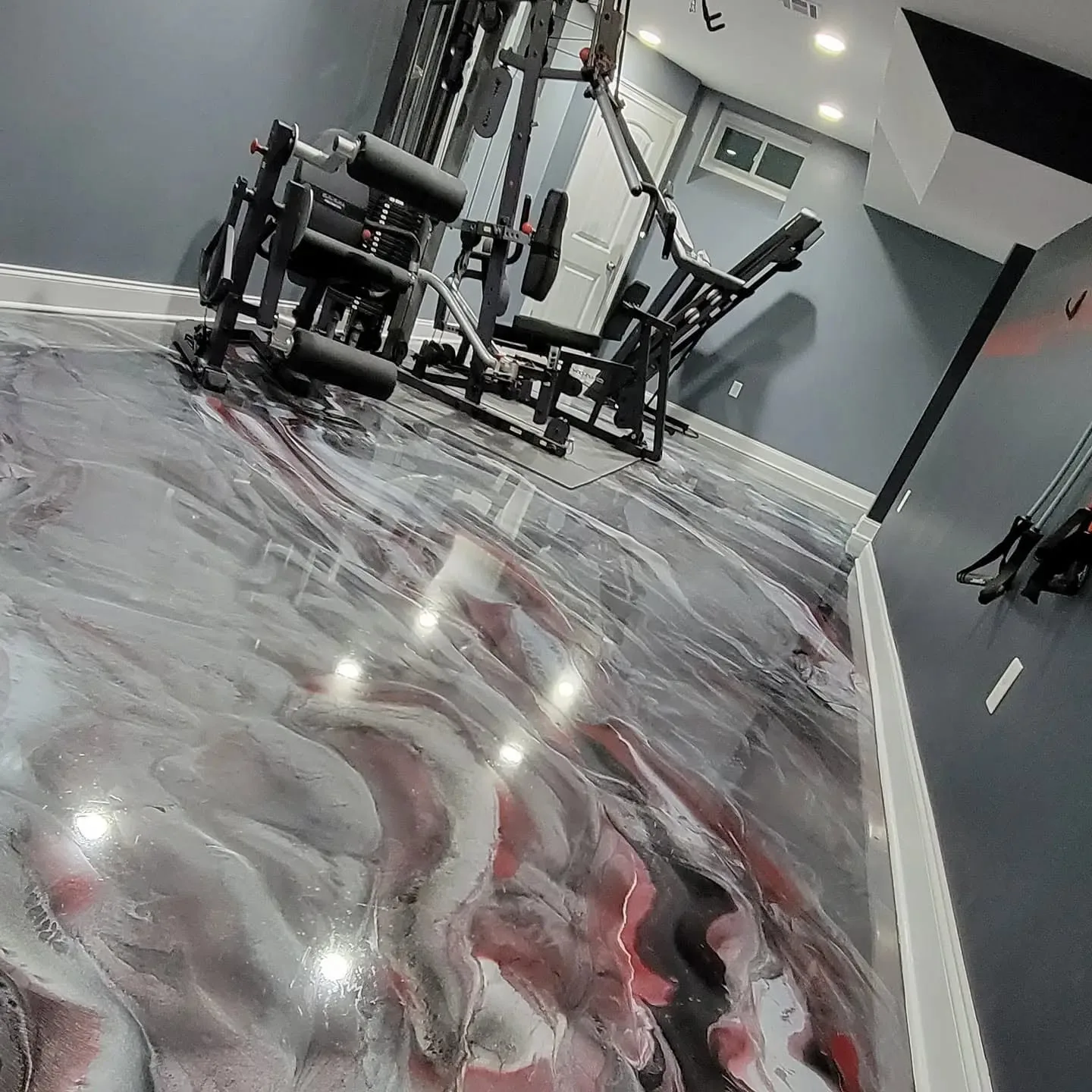
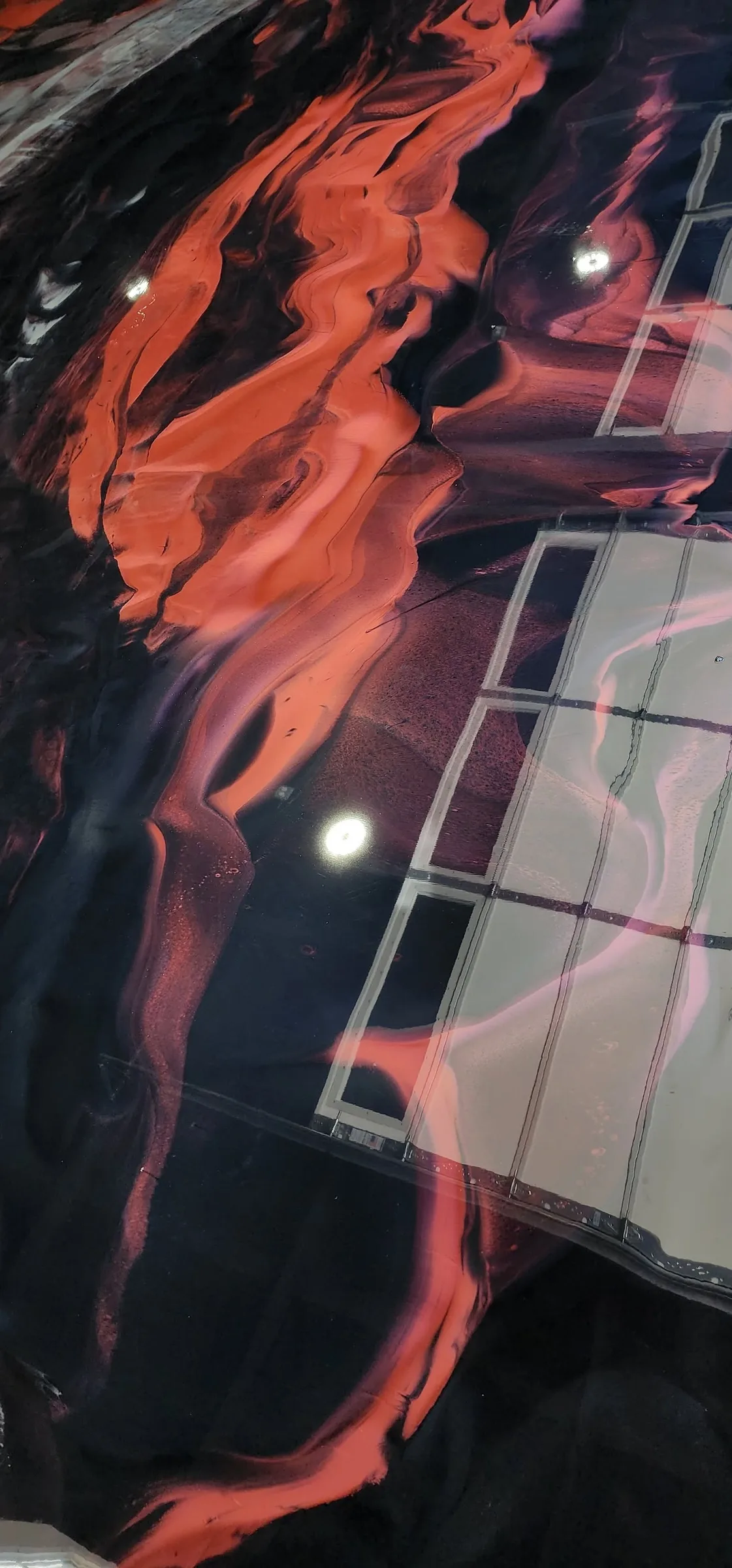
Other jobs from the file, not all of them this service. See the gallery






Questions about damaged garage floor coating repair
Why is my garage coating peeling where I park?
Hot tires soften a thin or poorly bonded coating and pull it up as they cool, which is why peeling shows up right where the tires sit. It is most common with roll-on kits and coatings poured on concrete that was not ground. Danny checks how far the weak bond goes before deciding between a section repair and full removal.
Can oil stains be fixed before recoating?
Fresh oil on a coated floor wipes up. Oil that soaked into bare concrete through a chip or a failed area has to be cleaned out or ground away, because a new coating will not bond over it. Deep stains sometimes take more than one pass, and Danny will tell you if a spot is too saturated to coat over.
Should I replace the whole garage floor instead?
If most of the coating is still bonded, repairing the damaged areas and recoating is usually the sensible route. If the coating is peeling in many places or was a thin kit to begin with, removal and a new floor will hold up better. Danny looks at the garage and recommends one plainly, with his reasons.
Do hot tires damage a professionally installed coating too?
Less often. Hot-tire lifting happens when a coating is thin, poorly bonded or not fully cured when the car first parks on it. A system built on a properly ground slab usually handles warm tires well. If a contractor’s floor is lifting at the tires, Danny looks for the underlying reason, which is often skipped grinding or a sealer left underneath.
Should I put mats under the car after the repair?
A mat under each front tire in winter catches slush and salt before it spreads across the floor, and a drip tray under an older car keeps oil off the coating. Choose mats with a backing that will not trap water against the floor for weeks. They protect the repaired areas and the rest of the garage alike.
Can a damaged garage floor be repaired in the middle of winter?
Sometimes. The coating needs the slab and the air within the product’s range to cure properly, and an unheated garage in January often falls short of that. A heated garage can be repaired any time. Danny checks the conditions at the walk and may suggest a cleanup to get through the winter, with the full repair booked for spring.
Close to this one
Peeling, bubbling, chipped or faded coatings, patched or recoated, plus upkeep plans for floors that work hard.
- Floor Coating Inspection ServicesA hands-on walk of an existing coated floor, with a plain read on what is sound, what is failing and what each part needs.
- Protective Topcoat RenewalA fresh clear wear layer poured over a sound coated floor before traffic reaches the color, with the option to change the sheen.
- Scheduled Commercial Floor MaintenanceFloor maintenance visits set on the business calendar, with small fixes handled on the spot and bigger work booked for planned closures.
- Epoxy Floor Replacement and ReinstallationFailed epoxy floors ground off to bare concrete and replaced from the base up, with the chance to switch to flake or a high-end metallic.
- Epoxy Floor RepairRepair for chipped, peeling, cracked and worn epoxy floors, starting with why the floor failed before deciding to patch, recoat or redo.
Every county Danny covers, and every town in them, has its own page. See every areaSee the galleryRead: What Road Salt Does to a Garage Floor, and How a Coating Helps
Danz Handz
Danny Carrero, epoxy specialist
dhepoxy@gmail.com
Cranford, NJ. Mon to Sat, 8 to 6. Hablamos español.
Tell Danny about the floor
Describe the floor and what you have in mind. Danny calls back and comes out to look at it.